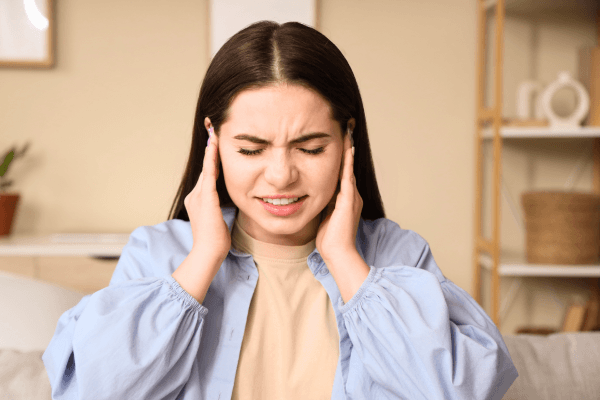
Dizziness that comes on suddenly can feel deeply unsettling. Many people describe a moment where everything changes without warning—the ground feels unstable, their head feels disconnected from their body, or the environment seems subtly or dramatically altered. It is not just a physical sensation; it often carries an immediate emotional response. Concern. Confusion. Sometimes fear.
The suddenness is what makes it feel dangerous.
However, in most cases, sudden dizziness is not a sign of something serious. It is far more commonly the result of a temporary disruption in how your brain is processing balance information. To understand why this happens, it helps to understand how balance actually works.
Balance is not controlled by one system. It is a complex integration of the inner ear, the visual system, and the body’s proprioceptive input. The inner ear detects movement and acceleration. The eyes help orient you within your environment. Your muscles and joints tell your brain where your body is in space. Under normal circumstances, these systems work together seamlessly.
Dizziness occurs when there is a mismatch.
This mismatch can happen very quickly, which is why dizziness can feel like it comes out of nowhere.
One of the most common causes is a condition called Benign Paroxysmal Positional Vertigo, or BPPV. This occurs when small calcium crystals within the inner ear become displaced. These crystals move into the semicircular canals, where they do not belong, and begin to interfere with normal fluid movement. The result is a sudden, intense spinning sensation when the head changes position. Many people first notice this when they lie down, roll over in bed, or look up.
Another common cause is Vestibular Migraine. This is often misunderstood because many people associate migraines only with headaches. In reality, migraine is a neurological condition that can affect sensory processing in a number of ways. Dizziness, visual sensitivity, light sensitivity, and a sense of disorientation are all common features. For some people, dizziness is the primary symptom, and headaches may be absent or minimal.
Persistent postural-perceptual dizziness, or PPPD, is another increasingly recognised cause. This condition often develops after an initial trigger such as BPPV, illness, or a period of high stress. The brain becomes more sensitive to movement and visual input, and over time this leads to a persistent feeling of imbalance. People often describe feeling as though they are rocking, swaying, or walking on something unstable.
Sudden dizziness can also be related to changes in blood pressure, particularly when moving from sitting to standing. This is known as orthostatic hypotension. Dehydration, fatigue, and certain medications can all contribute to this.
Anxiety is another important factor. The relationship between dizziness and anxiety is complex and bidirectional. When the body is in a heightened state of alertness, changes occur in breathing patterns, muscle tension, and sensory processing. These changes can create dizziness. At the same time, dizziness itself can trigger anxiety, creating a cycle that reinforces both symptoms.
For many people, the most distressing part is not the dizziness itself, but the uncertainty around it. Not knowing what is causing the sensation can lead to increased vigilance, which in turn can amplify symptoms.
This is why understanding when dizziness is something benign—and when it requires urgent attention—is so important.
There are certain symptoms that should never be ignored. If dizziness is accompanied by difficulty speaking, weakness on one side of the body, severe headache, double vision, or difficulty walking, urgent medical assessment is required. These may be signs of a neurological event such as a stroke.
Outside of these situations, sudden dizziness is most often related to the inner ear or the brain’s processing of balance information.
The reassuring reality is that these conditions are highly treatable. Once the underlying cause is identified, management becomes much more straightforward. BPPV can often be resolved quickly with repositioning manoeuvres. Vestibular migraine can be managed through lifestyle strategies, supplements, and sometimes medication. PPPD responds well to vestibular rehabilitation and addressing the underlying drivers of sensitisation.
Sudden dizziness may feel unpredictable, but it is rarely random. There is almost always an explanation—and importantly, there is a pathway forward.